A Simple Guide for Businesses and Sports Clubs
Power Purchase Agreements (PPAs) offer UK businesses and sports clubs a smart way to secure renewable energy at stable prices, bypassing volatile wholesale markets. These contracts let you buy electricity directly from generators, often from solar or wind farms, locking in rates for 10-25 years.
Simple Explanation of PPAs
A PPA is a long-term contract where a generator sells electricity directly to a buyer at a fixed or indexed price, shielding against energy price swings. Unlike standard supply deals, PPAs tie you to a specific renewable source, supporting green goals while cutting costs over time.
In the UK, PPAs gained traction post-2022 energy crisis, with over 20GW of capacity signed by 2024 as firms chased net-zero targets.
How PPAs Work in the UK
UK PPAs connect buyers to generators via physical (on-site delivery) or virtual (financial settlement) setups. Generators build and operate assets like solar farms and large “roof spaces” such as sports clubs; buyers pay a fixed rate per MWh, often with inflation adjustments.
Key steps include:
- Site assessment for solar/wind viability.
- Negotiating terms via brokers.
- Grid connection and metering.
- Payments start post-commissioning, with Contracts for Difference (CfD) backing some for price stability.
Who Uses PPAs in the UK
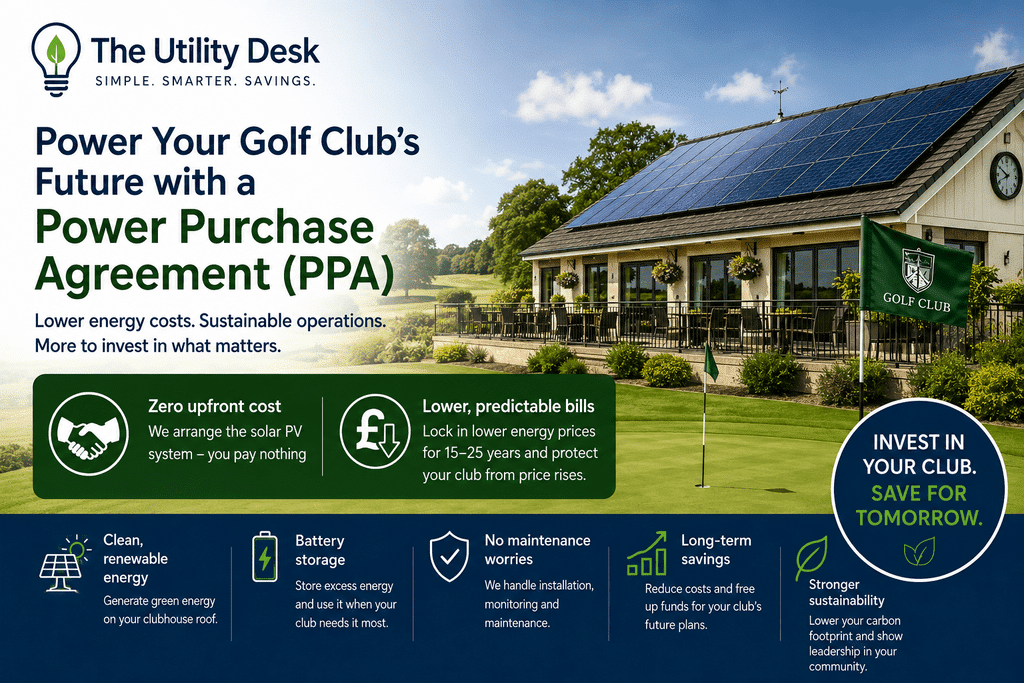
SMEs, manufacturers, and sports clubs favour PPAs for cost savings and ESG boosts. Rugby clubs have adopted solar PPAs to power floodlights and facilities.
Sports venues benefit from on-site solar PPAs, generating power during matches. Data centres and factories also sign up, with 40% of new UK PPAs targeting commercial users in 2025.
Solar PPAs Explained Simply
Solar PPAs involve a provider installing panels on your roof or land, selling generated power back at a fixed rate. No upfront costs—you pay only for electricity used, which can be lower than the equivalent electricity bought from the grid.
Behind-the-meter solar PPAs feed directly into your supply, reducing export losses. Behind-the-meter solar PPAs feed electricity generated on-site directly into the premises, reducing the amount of electricity that needs to be bought from the grid, they align with the UK Solar Strategy, aiming for 70GW by 2035.
Pros and Cons of PPAs
Pros:
- Price certainty amid volatility.
- Renewable credentials for sustainability reports.
- No capital outlay.
- Hedge against carbon taxes.
Cons:
- Long lock-in periods limit flexibility.
- Site suitability required.
- Early termination fees.
- Complexity in contracts.
| Aspect | Pros | Cons |
| Cost | Potentially lower, more predictable electricity cost | Potential exit penalties |
| Green Impact | Direct renewables support | Site-dependent feasibility |
| Flexibility | Stable budgeting | 10-25 year commitments |
FAQs
Final Thought
For many UK organisations, a PPA is not just an energy contract; it is a strategic tool that aligns cost control with sustainability goals. By tying your electricity spend directly to a renewable generator, you gain visibility over long-term pricing while visibly supporting the transition away from fossil fuels.
This becomes especially powerful for clubs and SMEs that struggle to fund large capital projects but still want the benefits of on-site or dedicated renewable energy. A well-structured PPA shifts the financial and technical burden to a specialist provider while your organisation focuses on its core activities. You effectively rent clean power rather than owning the hardware from day one.
At the same time, PPAs are long-term legal agreements, and they deserve the same level of scrutiny as any major lease or finance commitment. Understanding indexation, volume risk, and end-of-term options up front will help you avoid surprises later and ensure the deal still works for you if your usage changes.
For businesses and sports clubs willing to invest a little time in due diligence, PPAs can unlock access to cheaper, greener electricity that might otherwise be out of reach.
If your club or company has meaningful electricity demand and at least some medium- to long-term certainty about its site, exploring a PPA could be one of the most impactful energy decisions you make over the next decade.
Want to know whether a PPA could work for your business or sports club? Start with a free business energy bill review and we can look at your current energy costs and the options available to you.
Want to know whether a PPA could work for your business or sports club? Start with a free business energy bill review and we can look at your current energy costs and the options available to you.